Alaska Natives at Fort Ross
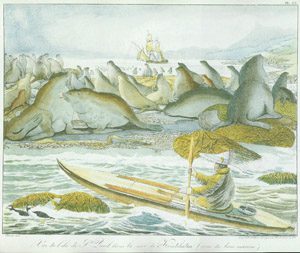
The Russian American Company (RAC) established Fort Ross and worked with many diverse people to build and operate the settlement. Fort Ross’ first manager, Ivan Kuskov, chose 25 Russian craftsmen and 80 Alaska Native sea hunters to accompany him on the 1812 voyage that would establish Fort Ross. Russians collectively called Alaskan workers at Fort Ross Aleuts but they actually came from many Alaskan tribes. Most men on this first trip were from Kodiak Island, but over the next 30 years they would come from the Aleutian Islands and Alaskan Peninsula. RAC also brought native people from Hawaii to Fort Ross, making it a truly multicultural settlement.
The Kashaya Pomo called the Alaska Natives Underwater People because their boats sat so low in the water it seemed as if they were coming out of the sea. The iqyan (kayak) they developed is still studied today and its design is incorporated into modern shipbuilding. The Russians called these skin boats baidarkas.
The Alaska Natives were expert sea hunters. They honed their skill over thousands of years while living on isolated islands and waterways. RAC sent Alaska Natives along the coast to hunt for otter and fur seal pelts. They traveled great distances by kayak, including the Farallon Islands 35 miles southwest of Fort Ross across the rough open ocean, where the Alaska Natives stayed for months at a time. They used a spear with a detachable point tied with sinew to an air bladder made from a sea mammal’s stomach. After the animal is speared, hunters track the floating bladder, waiting for the animal to come up for air. This traditional method is more productive than using modern weapons like a musket because when a sea mammal is shot, it sinks and the valuable pelt and food is lost.
At Fort Ross the Alaska Natives took on other work like felling trees to build the settlement, blacksmithing, ship building, and of course hunting.
The Alaska Native Village
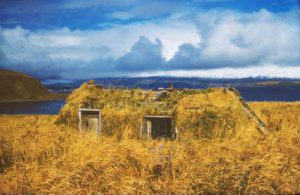
Alaska Natives made their home on the windswept bluff between the fort stockade and the Pacific Ocean where they could watch ocean conditions and gain quick access to the water. While this site is windy and barren, it resembled the treeless Aleutian and South Kodiak Islands that were familiar to the Alaska Natives. This area was home to single Alaska Native men and Alaska Native families. Intermarriage between Alaskan men and Kashaya and Coast Miwok women was common, and these families would join the Alaska Native village.
Their homes were most likely similar to those in Alaska: semisubmerged sod homes, called Ulax, held up by local redwood or driftwood. Submerging part of the home offered protection from wind and winter storms. At Ross the homes might have had windows, a split door, and a wood burning stove, amenities introduced by the Russians.
Native Women at Fort Ross
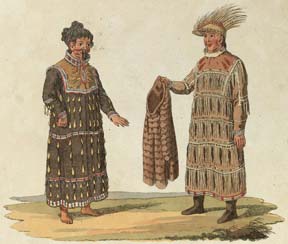
Fort Ross farmed and ranched food to feed its own colony, but also supplied food to the Russian colonies in Alaska. Food was prepared communally by the few women that lived in the village. In Alaska the Russians ate separately, consuming a diet of meat, vegetables, and starch, whereas the Alaska Native diet came mostly from the ocean. Unbeknownst to the Russians, seafood is a good source of vitamin A, B, C, D, and E; those in Alaska who did not adopt the native diet were badly affected by starvation and scurvy.
In addition to their daily chores, women were expected to make specialized clothing for sea hunters, such as a kamleika, a long, hooded, waterproof shirt made by sewing together sea lion, walrus, or whale intestine. They also made beautiful bird parkas to take advantage of feathers’ water resistant and insulating qualities.
Creoles
If an Alaska Native woman married a Russian or Creole (a person of mixed native and Russian blood), she would join the Creole class. This allowed her to move into the Russian’s house and no longer be subject to the imposed sewing and gathering chores required by RAC. Mixed Russian/Alaska Native or Russian/Californian Creole boys would be apprenticed in trade or sent to Russia for education; in exchange for their education, the boys would pledge ten or more years work with RAC. Many Fort Ross craftsmen were Creole. RAC employed skilled Creole scribes, doctors’ assistants, and engineers.
- Lauren Peters, FRC Alaska Native Advisor
Fort Ross Alaska Native Brochure - (PDF)
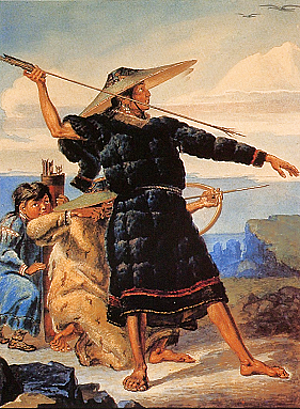
Native Alaskans by Daniel F. Murley
Excerpted from Fort Ross © 1998 Fort Ross Interpretive Association (Fort Ross Conservancy) ISBN # 1-56540-355-X
The population of the colony at Ross consisted of a multicultural, multiethnic community brought together by czarist Russia’s mercantile fur acquisition and trading enterprise, the Russian-American Company. At Ross, the community was divided into four ethnic residential areas. Upper level Russian management lived within the stockade. Ethnic Russians and Creoles (people who were the offspring of Russian/Native unions) of lower standing lived in a village of small houses with kitchen gardens. This village was located outside the stockade to the west. A Native Alaskan village of small wood or plank houses and possibly some semi-subterranean dwellings was located on the ocean bluff in front of the stockade. Here resided single Native Alaskan men, some Native Alaskan families, and other households consisting of Native Alaskan men and Kashaya and Miwok women and their children. The Kashaya also lived in a small village northeast of the stockade and in many other villages in the coastal hills above Ross. By far the most populous group was Native Alaskan. In the 1820 census compiled by then-manager Ivan Kuskov, 53 per cent of the adult population of 260 were Alaskan natives and the largest number of these (126) were from Kodiak Island. The identity of these valuable workers, who were truly the backbone of the Russian-American Company, has often been confused and poorly represented. The term “Aleut” was used by the Russians to designate all native peoples from the western Aleutian Islands to the Alaskan Peninsula and Prince William Sound. For some nine to ten thousand years, these people inhabited the western portion of the Alaskan Peninsula, the Kodiak Archipelago, and the numerous treeless, windswept, volcanic islands which stretch 1,250 miles from Alaska to the Kamchatka Peninsula of Siberia. The Aleutian islands separate the Bering Sea on the north from the Pacific Ocean on the south, and contain an extremely high concentration of marine resources.
Many diverse native cultures with disparate cultural identities were represented at Ross. Most Native Alaskans here were Alutiiq [1]; among them were Chugachmiut from Prince William Sound, some Unegkurmiut from the Kenai Peninsula, and many Qikertarmiut, “the People of the Island,” from Kodiak Island. There were also among the Alaskan natives people whom the Russians called Fox Island Aleuts, or more precisely, Unangan, “the People of the Sea.” In fact, in the Kuskov censuses of 1820 and 1821, there were only three Fox Island Aleuts at Ross. All were women, making the adult male labor force at Ross almost entirely Alutiiq. Company records and recent archaeological evidence, however, show that Unangan men, most likely from the eastern Aleutian Island of Unalaska, also spent time as hunters and laborers at Ross. There were also Alutiiq women at Ross—eighteen from Kodiak Island and one from Prince William Sound in 1820-21. One, Vera, lived with Vasilii Grudinin, the lead carpenter in charge of shipbuilding at the colony, and another, Catherine, with a highly regarded and widely traveled promyshlennik, Sysoi Slobodchicov. Three other Alutiiq women lived with creole men.
As populations of otter diminished near Ross, hunters had to travel farther for the company’s fur profits. Commonly, long-term expeditions were undertaken by the Alaskan hunters. Russian and contracted American ships would transport the baidarkas, (qayaq in Alutiiq: swift narrow craft of marine mammal skin stretched over a wooden frame) to a given location, then drop off the men and their boats. These free-ranging hunters would remain for two or three months, hunting sea otter, seal or sea lion, then be retrieved by a mother ship and returned to the settlement at Ross.
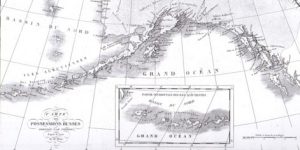
The Russians also had an artel (a work group of hunters ) for at least fourteen years on the Farallon Islands—rocky volcanic specks which lie west of the entrance to San Francisco Bay. Here bird eggs were gathered, birds were killed for food, and their skins were used for garments. Sea lions were killed to provide skins and sinews for the baidarkas, meat and blubber for food, bladders and intestines for waterproof clothing and oil for lamps. This desolate post was populated by a Russian overseer, Alutiiq hunters with their wives, and some Native Californians. The archaeological record also reflects this ethnic composition, as artifacts recovered on the Farallons represent elements of Russian, Alaska Native and California Native cultures.
The highly skilled Alaska Native laborers were initially used for marine mammal hunting, but they later served as coopers, tanners, carpenters, sawyers, porters, hunters, coal miners, fishermen and general laborers. “In addition, when not hunting, the Aleuts were used for other types of heavy work, such as fetching wood from locations where horses could not be used.” (Khlebnikov 1990: 132) In 1821 Manager Kuskov requested of Chief Manager Murav’ev in Sitka that five Aleuts be rewarded for long service to the Company. They had been employed nearly six years in ax and saw work, but had never received any compensation besides clothing and shoes. Murav’ev, however, set their salary at 100 rubles per year apiece. [One silver ruble was worth approximately $.75 U.S. cents in the early 19th century.]
One of these laborers, Malikhnak Matvei, from Ugatskoe Village on Kodiak, was married to a Native Californian woman from Bodega Bay, named Kytypaliva, with whom he had a daughter, Ashana Alimpiada. According to Company records he probably worked at Ross for the entire time the outpost was in operation and when the Ross office closed in 1841, he most likely returned to Alaska with his family. It was possibly his daughter who was referred to in this notation of the Company headquarters in Novo-Arkangel’sk (Sitka) on June 12,1842: “Aleut Aleksei Nariadov has asked permission to marry Olimpiada, a baptized Indian woman from the shores of California.” Another prominent Alutiiq leader, a man known simply as Matvei, lived at Ross and fathered a child; he also died here and was buried locally. He died a death curiously befitting a person from a noble seafaring culture. “He had been at Bodega Bay and had separated from the others in a two-hatch baidarka; after waiting for him to return for a long time, they had found him dead on the shore with [his] baidarka. As his body did not show any suspicious signs, they concluded the toion [chief] had grown weak from rowing and with hunger and had died” (Khlebnikov 1990:143).
Other men from the Kodiak archipelago wished to stay in California rather than remain in the service of the Russian-American Company. As an important Company official, Kiril T. Khlebnikov, succinctly reported: “There have been cases in which the Aleuts have run off to the mountains with their lovers …” (Khlebnikov 1990:194). Ilia Chevyihpak, from Kilyudinskoe Village on Kodiak, fled from Ross with an Indian “wife” in 1824 (Khlebnikov 1990:162), but was soon brought back to Ross. Some who ran away were either killed or captured by the Spanish, while others escaped temporarily, only to return later. Such a case was reported by Fedor Litke on a visit to Bodega Bay, while circumnavigating the globe on the Russian sloop Kamchatka in 1818. The man who interpreted for the Indians and visiting Russians was an Aleut. He “had run off when Kuskov first went to the Port of San Francisco. [The Aleut] had lived with the Indians for nearly a year, but when the next group came to hunt, he reappeared and began hunting sea otters with the others … He said they [the local natives] quite often fight and quarrel with one another, but they never bothered him” (Litke 1975:135-138). Another, as noted by Kiril Khlebnikov in 1820, found a unique position after leaving the Russians. He became a servant for the Spanish governor in Alta California. Khlebnikov wrote of a visit to San Carlos Mission near Monterey, “The governor had a Chinese cook from an American ship who had taught his skills to one of our Aleuts; the latter now works as cook and valet.”
At Ross, the population of Native Alaskans fluctuated over the colony’s 29-year operation. In 1812, at the beginning of the settlement, there were 80 Native Alaskan males at Ross, mostly marine mammal hunters. Their numbers reached a high of 138 in 1820, and a low of 42 in 1833. In 1838, half [sixty] of the Aleuts living in the settlement were withdrawn to reinforce hunting parties in Alaska which had been decimated by disease. At this outpost of the Russian Empire on the shores of Alta California, the traditional lifeways of the Native Alaskans sent here from Kodiak Island were significantly altered. In their native villages the Alutiiq people, prior to Russian exploitation, had a complex society with hierarchical social structure. There was an estimated population of 10,000 spread among numerous villages, some with as many as 1,000 inhabitants. By the mid-1800s, epidemic diseases introduced by the Russians, overwork and starvation had reduced the population of Kodiak Island from 10,000 to 1,500. So those Native Alaskans at Ross were a mere remnant of a once thriving, dynamic culture. Family trees, epic stories, songs, and specialized knowledge accumulated through thousands of years died with the elders who were the tradition bearers in these cultures which had no written language.
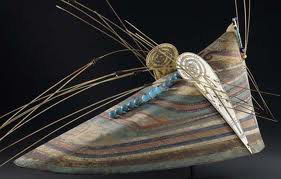
These ancient cultures depended on the bountiful yet hazardous marine environment for inspiration and subsistence; they set out to hunt marine mammals such as seals, sea lions, sea otters and whales. With intricately carved effigies of their marine mammal prey decorating their bentwood hats and kayaks, Alutiiq men had for millennia plied the unpredictable waters of the North Pacific Ocean. Women gathered bird eggs, shellfish, seaweed and other edible plants, roots and berries. The qayaq, or baidarka, the light maneuverable craft used by these sea hunters, was made primarily from sea lion skins stretched over a frame of driftwood. Open ocean hunting from these slight yet swift craft was a high risk, high reward proposition. Acquisition of large amounts of food and fabric brought both nutrition and social recognition to the hunters. Russian Lieutenant M.P. Lazarev commented, “The Aleut is, so to speak, born in a baidarka, skillful in all forms of hunting and familiar from childhood with winds and currents.”
Ironically, it was these very skills which caused the eventual disruption of these native cultures by Russian hunters in search of fur. Unable to master the remarkable hunting skills themselves, the Russians captured, coerced and enslaved much of the native population for the procurement of seal skins and the highly prized pelt of the sea otter, Enhydra lutris. These luxuriant, dark brown furs brought fortune to the Russian-American Company, but brought death and degradation to the Aleut and Kodiak Island populations. At Settlement Ross, as in Alaska, the Native Alaskans were employed in marine mammal hunting, and baidarka and baidara maintenance and construction. Baidaras (anyaq in Alutiiq) were open skin-covered craft propelled by oars. Their women gathered shellfish, cleaned and dried fish, and constructed and maintained kamleikas, waterproof garments stitched of marine mammal intestines, for the hunters.
At Ross, as at other Russian-American Company outposts, hunting sea otter was a priority. Manager Karl Schmidt, one of the more humane managers, replied to Khlebnikov, the often stern company administrator, on his reasons for terminating a sea otter hunt: .”..the men [Aleuts] all asked me not to keep them for the hunt… because the last time that they had been separated from their families, their wives and families [had] received no assistance and had gone hungry; therefore they begged me to help them this time to feed their families. Notwithstanding the shortage of supplies at Ross, I tried to supply them with food as much as possible but several of the women nevertheless ran away out of hunger and the others endured terrible privation” (Khlebnikov 1990:131-132). Though the Russians brought Alutiiq men, their skills and their crafts, they did not bring as many women. Soon after their arrival in California, Alaska Native men formed unions with Native California women. Kuskov also notes in his 1820 census that of the Californian women from the vicinity of Ross, the Point Arena area, the Slavianka River and Bodega, the vast majority were with Alutiiq men. These women were Kashaya, Central Pomo, Southern Pomo and Coast Miwok. Of these 56 Native Californian women residing in interethnic households 43 were living with Kodiak Island Alutiiq men. According to the 1820 and 1821 censuses, these unions with Native Californian women had produced 28 children.
One may be able to draw inferences from archival and archaeological works dealing with the life of Alutiiq people in the service of the Russian-American Company at the settlement of Ross. Life was probably difficult, the men were far away from their homeland, their social and religious organizations, their beliefs, and their traditional lifeways had been disrupted, and yet they discovered a solace in relationships with Native Californian women. The Alaskan Native village, with its multi-ethnic, multilinguistic composition must have been one of the liveliest locations in the entire settlement. Within the stockade, high ranking Russians and Creoles carried on the affairs of a mercantile enterprise. Outside the thick wooden walls, the affairs of life went on in this ethnically mixed settlement. Among the diverse and displaced individuals there must have been love, romance, frivolity, revelry, marriage, separation, domestic disputes, interethnic disputes, joy, pain and suffering. We must honor the Alutiiq people who visited our shores many years ago. Although they came here not necessarily by choice, they made a unique historical impression on the lands and the peoples which they touched.
[1] Alutiiq (pl. Alutiit) designates the population of the cultural area which includes the Kodiak Archipelago, Prince William Sound, the Lower Kenai Peninsula and the Southern Alaska Peninsula (Clark 1984:196)
Vimeo video: The Last Baidarka of Prince William Sound